
About

Ildikó Pap is passionate about helping people grow and empowering them rediscover their innate power, worth and potential.
As a skilled psychologist, Ildikó has been working with different groups including bright youth, high achievers and adults in transition.
Her clients are open minded professionals and accomplished adults. They all find themselves overloaded by competing demands as they juggle their transition, relationships, and negative thoughts/emotions and being outwardly successful yet inwardly frustrated and stressed.
Ildiko Pap is passionate about helping adults grow and empowering them to reach their clarity and potential.
As a skilled psychologist, she has worked with various groups of people, including bright young people, high achievers, and international adults in transition. Her clients are high achievers and accomplished adults who are outwardly successful yet inwardly frustrated and stressed. They find themselves overloaded by competing demands as they juggle their life transitions, relationships, and workload.
Ildiko’ s concept: “Adults not only desire well-being; they can learn life skills to experience how things can go right, but they cannot learn these skills without failing. Failing is part of learning and growing.”
Her approach is collaborative, practical, and personal. She can assist you with managing your stress and gaining control over your mental overload, without having to use every smart self-help tip under the sun.
Ildiko’ s mission: to bring humanity and the art of living into performance.
Ildiko is about helping you think clearly, feel better, and perform sustainably.
I offer a small number of free workshops each year as part of my commitment to giving back and making evidence-based tools accessible to leaders under pressure. Chech this out:
https://ildikopap.com/en/funel/

Ildikó’s Expertize
- Anxiety
- Adjustment to a new environment
- Burnout
- Stress management
- Guilt, shame
- Self-esteem, self-care
- Personal and professional development
- Career Transition

Education, Credentials
- Ongoing Training in Cognitive Behavior Therapy (Academy of Modern Applied Psychology)
- Master’s Degree in Psychology (Pazmany Peter University of Hungary)
- ART LIFE COACH CERTIFICATE (Non-Credential, Internationally Accredited)
- Persolog® Trainer https://persolog.com
- GCE Advanced (A) level/ Bachelor’s degree in Early Childhood Education
Originator of forest therapy in Hungary, which is an one-on-one action oriented approach that stems from CBT (Cognitive Behavioral Therapy).
Hobbies
Volunteering, Tracking, Singing
Passions
People, Learning, Painting, Earth
Countries
Romania, Denmark, Hungary
Testimonial
Describe your life BEFORE counseling
A struggle: My life was riddled with self-doubt, guilt, shame, and negative, highly debilitating ‘self-talk’ that would hinder and limit my life and marriage across multiple fronts. I found myself constantly ruminating over past mistakes, being unnecessarily hard on myself with internal critiques, and constantly neglecting my own happiness and needs. Ultimately, each day felt like a chore to get through, made needlessly difficult by my own internal dialogue.
Anonymus
Testimonial
Describe your life AFTER counseling
A lot better. With Ildiko’s help, I was able to wrestle control over my inner ‘voice’ and become friends with it. What was once a highly critical and negative internal dialogue is now a supportive pillar that offers reassurance, credit, and encouragement. Furthermore, I have learned how to process negative experiences in the past in meaningful and healthy ways and how to treat myself with the kindness and compassion that I deserve. Beyond this, Ildiko’s counseling has significantly improved my relationship with my wife, as we are now more intimate, communicate often (and more meaningfully), and have fostered a stronger sense of trust.
Anonymus
Testimonial
On a scale 1-7, how much are you satisfied with the counseling provided by her?
10!
Anonymus
Testimonial
What did you find helpful about Ildiko’s approach?
Ildiko’s approach was very structured, yet it felt natural. Her kindness, patience, keen observational skills, wisdom, and insights are ever-present throughout every session. Beyond this, she was never judgemental and always understanding, and she has a knack for creating a warm positive environment that made me feel comfortable to share. Ultimately, she was able to help me develop a set of mental tools and techniques that empowered me to overcome my issues.
Anonymus
In today’s fast-paced and ever-connected world more often I hear the word „stress” in the office and outside of it. Do you experience stress regularly? Is stress a problem for you? Then you are at the right place to get some helpful tips on how to manage your mind and do self-care in order to equip yourself and be more efficient in coping with it.
Stress is a natural physical and mental reaction to life experiences. Everyone expresses stress from time to time. Anything from everyday responsibilities like work and family to serious life events such as a new diagnosis or the death of a loved one can trigger stress.
Stress can cause people to feel overwhelmed or pushed to the limit. While low to moderate levels of stress can be good for you when managed in healthy ways, extreme stress can become chronic and have a bad effect on the individual.With the consequences of poorly managed stress ranging from fatigue to heart disease and obesity, it is important to know how to recognize high-stress levels and take action to handle it in healthy ways.
When you’re feeling overwhelmed or anxious, it is easy to forget that you have choices and that you have the ability to handle your thoughts and emotions before you feel overwhelmed by them. Being able to control stress is a learned behaviour, and stress can be effectively managed by reframing our priorities and by calming the fears that arise in the mind and flipping the body from stress response into its healthy opposite—the relaxation response—you can activate the body’s natural self-healing mechanisms.
It is important to remember that everyone experiences stress differently. You may have a hard time concentrating or making decisions, feel angry, irritable or out of control, or experience headaches, muscle tension or a lack of energy?
• Pause and identify your sources of stress. What events or situations trigger stressful feelings? Are they related to your children, family, health, financial decisions, work, relationships or something else? How are your thoughts or behaviours different from times when you do not feel stressed? Just paying attention to our inner state or reaction will help us to gain clarity and decide more deliberately.
• Pay attention to your own stress signals. Observe your stress signals alike breathing, posture change etc. Meanwhile stressed out you have the urge to rush but taking a few seconds and scanning your body and noticing its signals will open the room for regaining control over the situation and your action.
• Enhance your sleep quality . P eople who are chronically stressed often suffer from lack of adequate sleep and, in some cases, stress-induced insomnia. It is important to take steps to increase the quality of your sleep. Begin winding down an hour or two before you go to sleep and engage in calming activities such as listening to relaxing music, reading an enjoyable book, taking a soothing bath or practising relaxation techniques like meditation.
• Take care of yourself. Eat right and drink plenty of water. Nourishing your body with the right food will give you the energy you need to tackle what life brings you, including stressful situation.
• Move your body or do some exercise. Physical activity, like walking in nature/dancing increases your body’s production of good-feeling endorphins, a type of neurotransmitter in the brain, and decreases the production of stress hormones.
• Retrain your brain for a new outlook. How you define stress can determine how it will affect you. By approaching situations with curiosity and seeing them as opportunities and refuting negative thoughts are all important aspects of trying to minimize your stress. Ask yourself: „How can I make this stressful problem work for me?” Note: Don’t overdo it with trying to think of a way to best use stress! If you’re unable to think of how to take advantage of whatever stressor you’re facing, simply accept that it’s there. Sit with it rather than flee from it.
• Reach out to a friend or trusted fellow. Pour out your heart and thoughts to someone who can listen without judgement. By sharing your stressful mind with another person there is a good chance you might feel hopeful and by sharing you may realize that you are not alone.
• Serve others through action or prayers. Giving time or support to others without a prize may likely to deepen our life satisfaction and purpose.
• Reach out for support. There is no need to face challenging life circumstances alone so stressful situations are a great opportunity to reach out to a friend and/or relatives. Accepting help from supportive friends and family not just improves your ability to manage stress but showing vulnerability would strengthen your relationships. If you continue to feel overwhelmed by stress, you may want to talk to a counselor/psychologist, who can help you better manage stress and change unhealthy behaviours.
• Make time for personal hobbies and open room for activities that brings flow and joy into your life.
The point is, we cope with stress in highly personal ways, and what works for one person might not work for another. But it’s always helpful to share stress-management ideas so that we can expand our repertoire and learn new techniques and approaches.
While there’s no one correct way to manage stress, there is a “right” way for you. And the more tools you have at your disposal, the better equipped you’ll be to pick the right one for the situation at hand.
Wishing you a focused day!
SARAH IVENS: Forest therapy
Forest therapy is a book that raises awareness about the scientifically proven impact of nature in our well-being, mental and physical health. It opens our eyes, heart and intellect about the benefits we could gain if we let ourselves and our loved once spend time in nature.
Several studies have determined that being in a forest environment have great benefits physiologically (can relieve tension and fatigue and enhance physical fitness), psychologically (can enable participants to relax, relieve stress, balance their moods) and socially (can improve the development of interpersonal relationships).
Research shows that spending time outside can improve the immune system, combat stress hormones, lower blood pressure, boost self-esteem and among the great benefits are improved parasympathetic nerve activity leading to better sleep, reduced sympathetic nerve activity, improved attention and focus and reduced mental fatigue.
You do not need to be an outdoorsy person or live near the forest in order to receive nature’ healing energy. This book is a practical manual for busy adults, for parents who spent most of their lives in urban area and need an easy guide on how to schedule nature time in a fun, interesting way. Chapters will give you plenty of ideas for each season and offers strategies on how to use experiences in nature as ways to deepen your relationship with your children, partner or friends. By applying the book given tips and fun activities you will enhance your self-care and feel more joyful and connected.
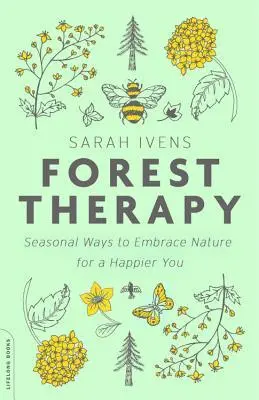
Watch this inspiring conversation with the author and get a bigger picture about Forest Therapy
Do you want to work on your self-esteem?
Do you struggle with stress? Book a session NOW
